Skip to content

Research

Far Akin studies how minds, natural and artificial, learn, represent, remember, perceive and act, and how far they are akin. The work runs as four long-horizon programmes, each built around one question. Under each programme are inquiries: bounded studies, each with a written design and a test stated in advance. The map below shows the subjects the programmes draw on. Mathematics, information theory, causal inference and philosophy of science serve as lenses throughout.

Four research programmes

Each programme leads with one question that no single study will settle. Its page sets out why the question matters, what makes it hard and the inquiries that serve it.

  • Generated cyanotype print of a nautilus shell cut cleanly in half, showing its spiral of sealed chambers.Generated photograph of a white sectional model of a three-storey house showing its rooms, with vermilion beads on small objects in three rooms.Generated render of an iceberg in cross-section, its small cap above the waterline and its large hidden body below.

    Representation and memory

    What does a model hold, which of it does it use and report, and how does what it holds stay correct as the facts it rests on change?

    Minds and models carry internal state and stored knowledge that decide their behaviour but cannot be read directly. This programme asks what can be read from outside, which readings reflect what a system uses, and how a memory can be revised and checked as the world changes.
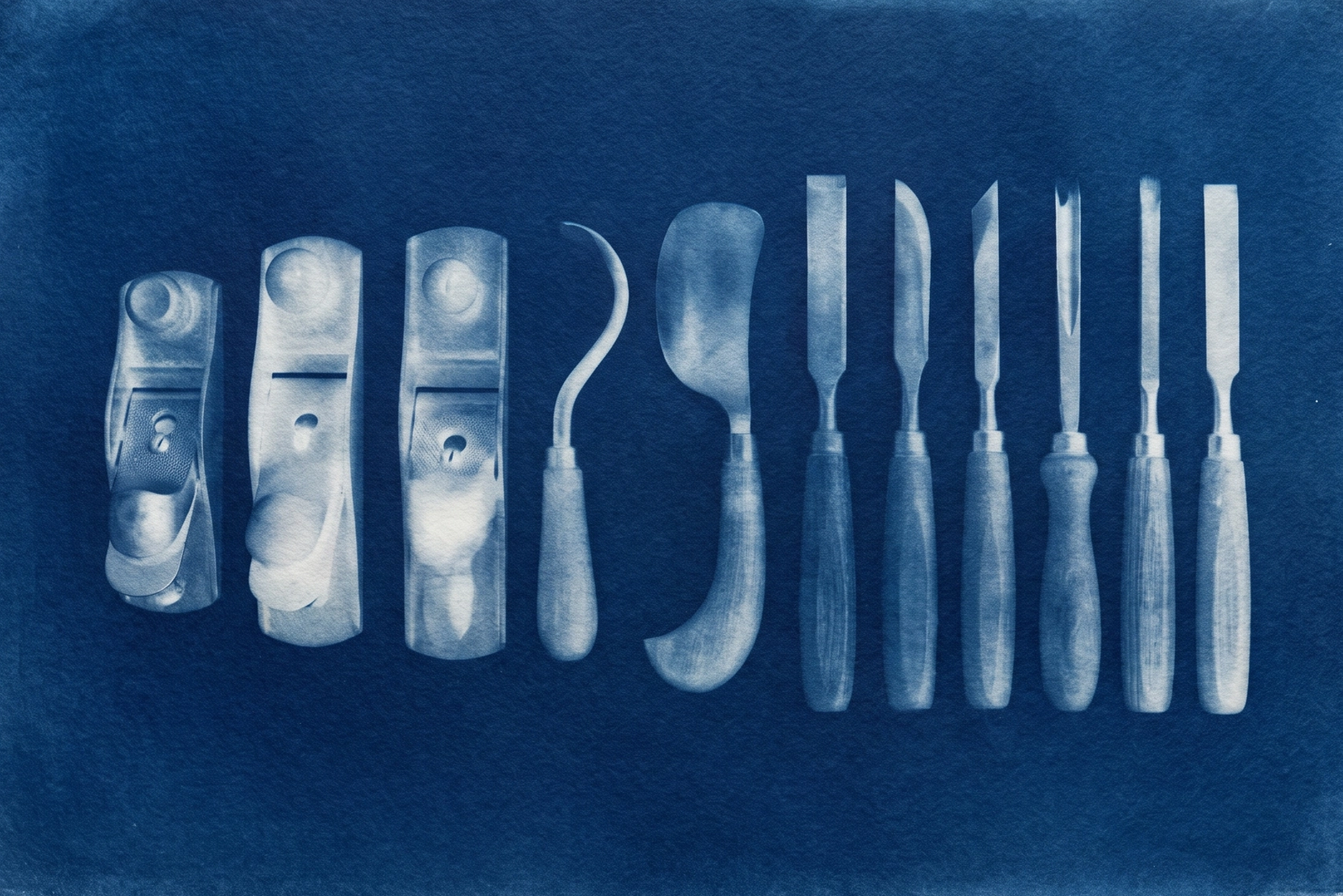
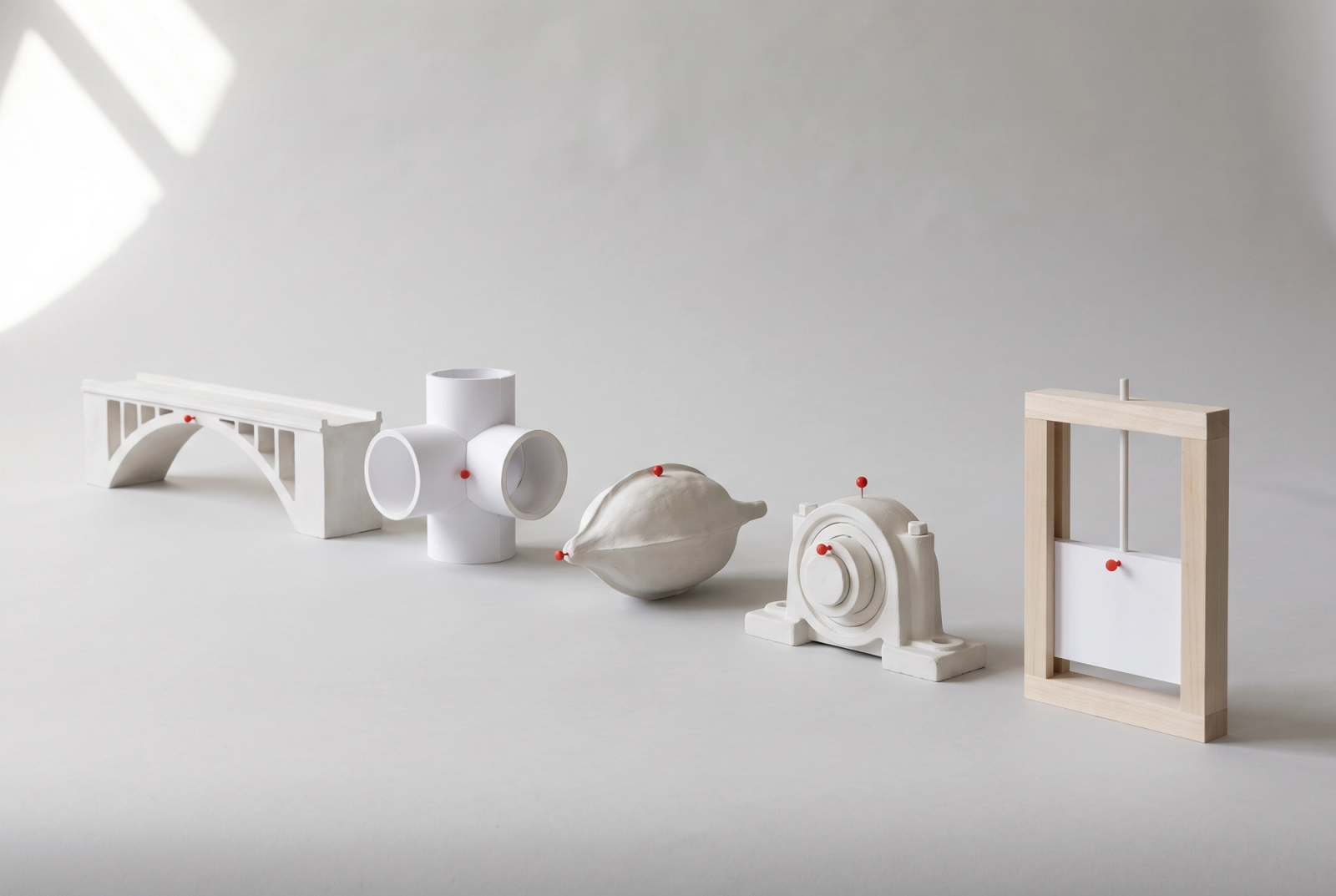
  • Generated cyanotype print of a row of small woodworking planes and carving tools, each shaped for one task.Generated photograph of five different small white plaster models in a row (a bridge, a pipe junction, a seed pod, a bearing, a sluice gate), each with one vermilion pin.Generated render of a narrow dredged channel through a shoal, mapped in fine detail while its surroundings fade to black.

    Where knowledge lives

    Where should what a model knows live, in its weights, in a store it consults or in checks on its output, and when does a small specialist judge better than a general model given the same knowledge?

    Much real work needs consistent judgement inside one domain, under that domain's own rules. This programme asks where specialised knowledge should live, in weights, in retrieval or in validators, and what a small specialist must show before it is worth building.

    Inquiries in this programme
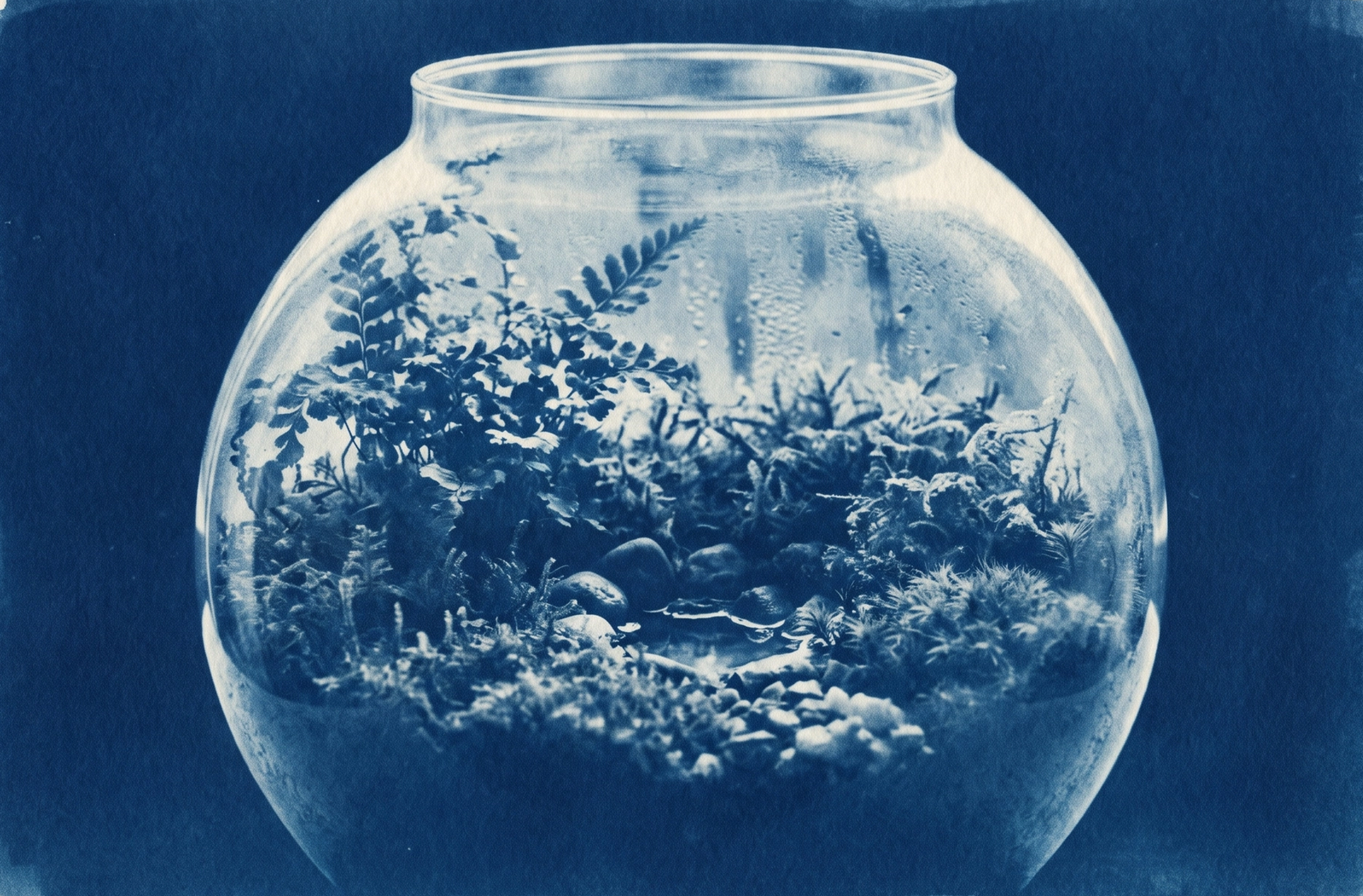
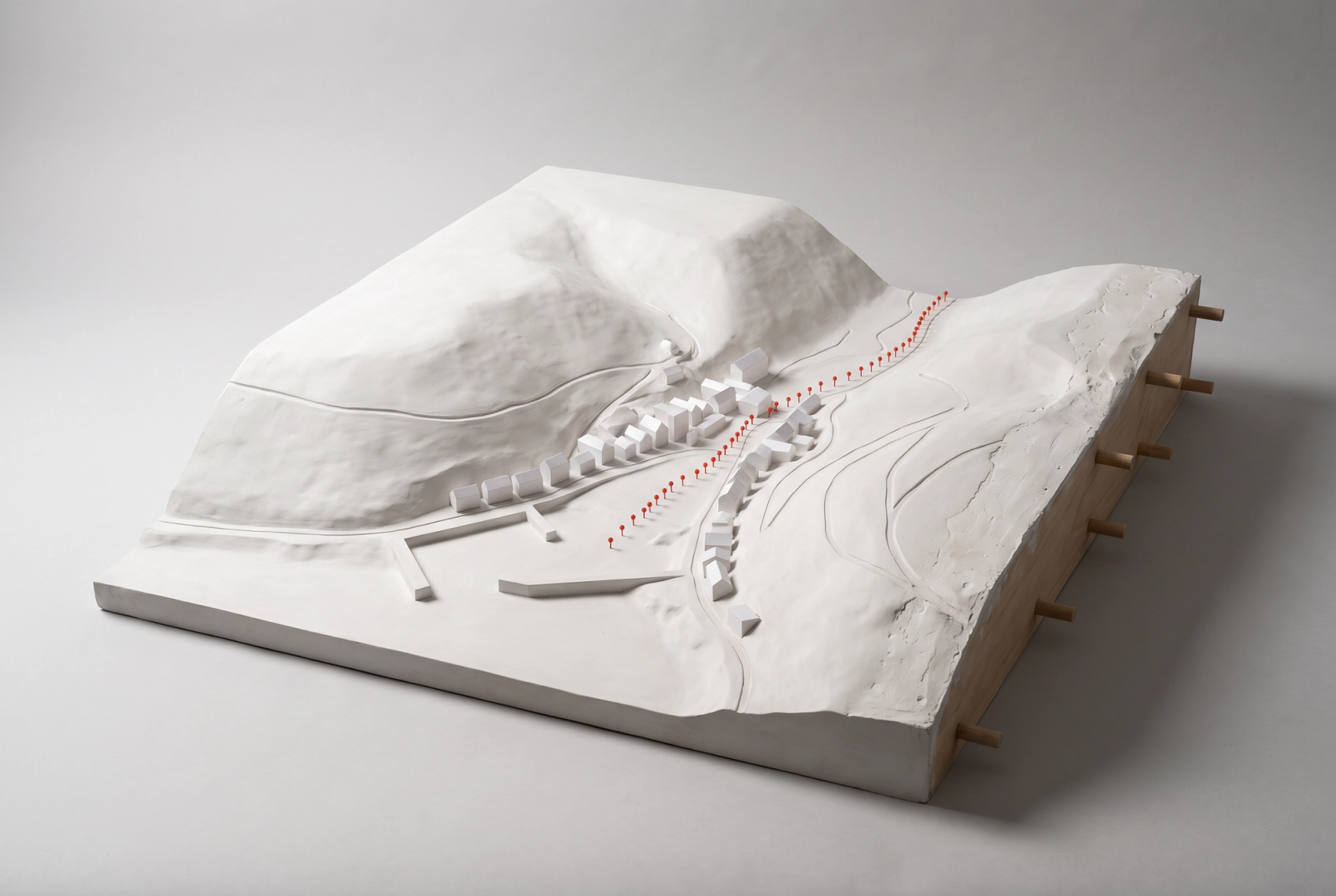
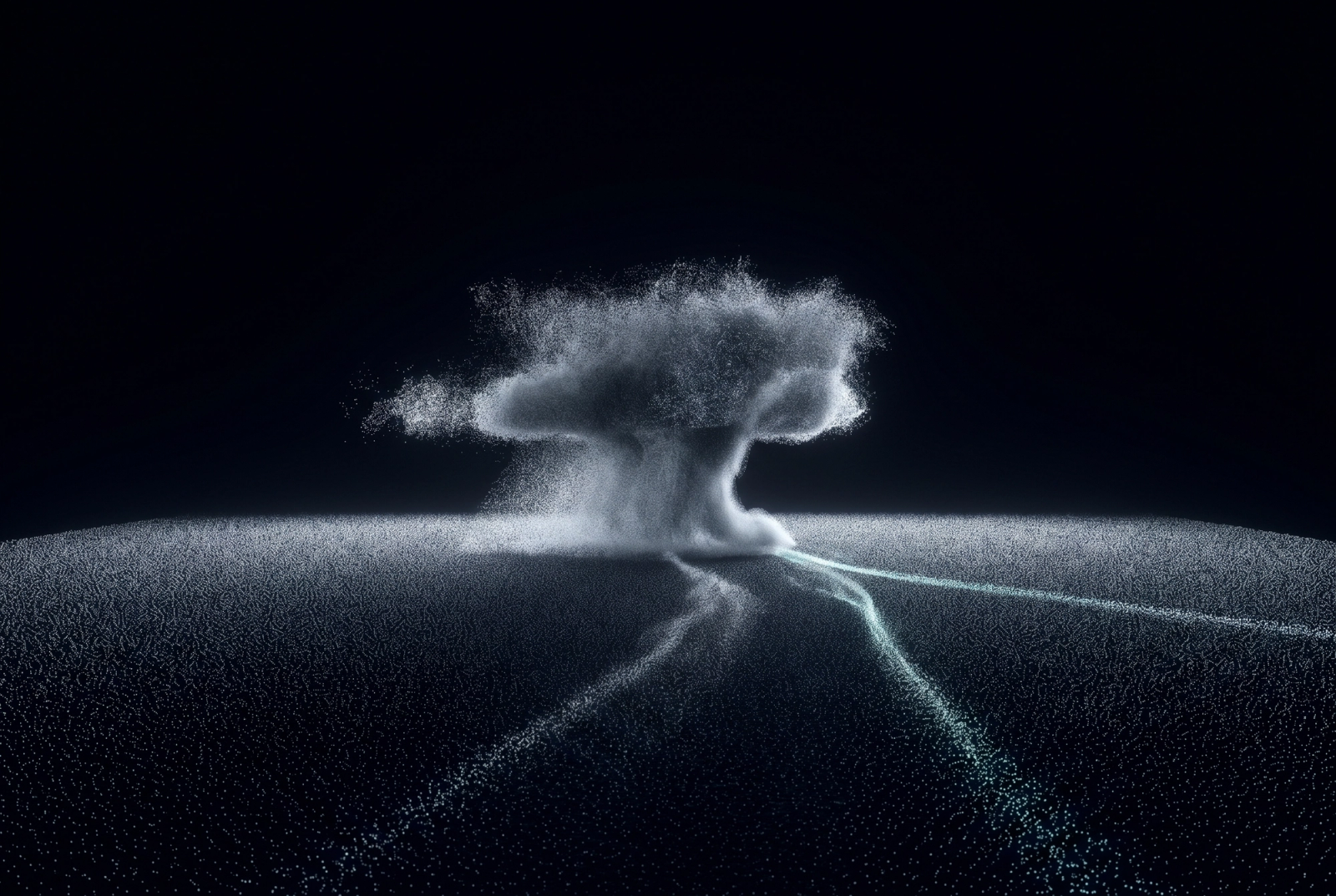
  • Generated cyanotype print of a round glass terrarium holding a small landscape of moss, ferns, stones and a pool, with condensation on the inside of the glass.Generated photograph of a white plaster valley-and-town model with a vermilion pinned path; at the right edge the model gives way to bare plaster and wooden armature.Generated render of a squall over open water made of points, with two diverging paths drifting away from it.

    Worlds and action

    What does an agent hold steady, and what must a learned model of its world keep consistent, under action and over time, before its predictions can stand in for that world?

    World models learn to predict what follows from an action, and they are now used to train agents and to judge policies. This programme asks what such a model must hold constant to be trusted, and what an agent defends when it is disturbed.

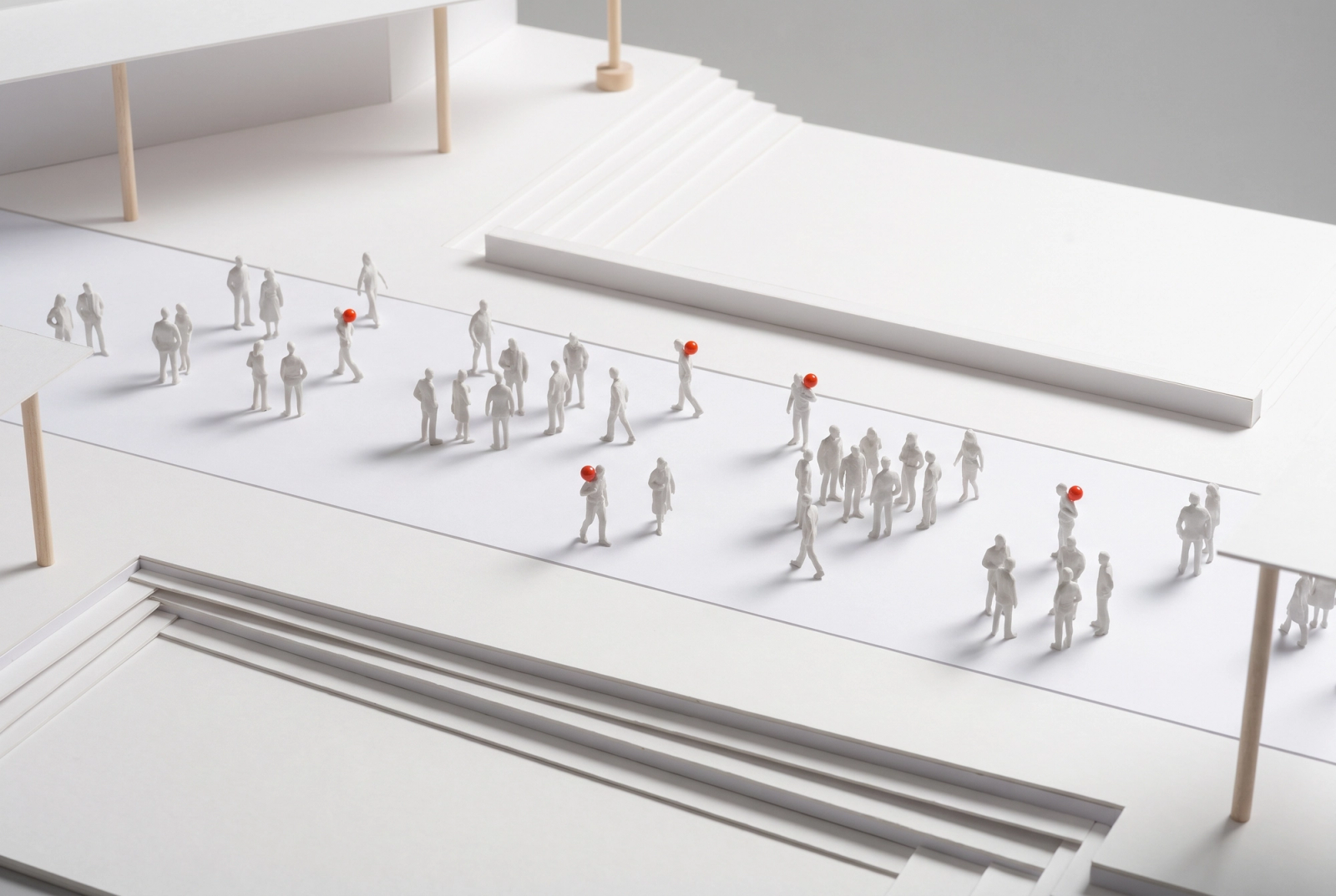
  • Generated cyanotype print of a plaster cast of a hand resting on a table, with the shadow of a living hand raised behind it.Generated photograph of about forty faceless white plaster model figures on a white plaza; five, in different groups, carry a vermilion bead on the shoulder.Generated render of a crowd on a harbour quay drawn as a point cloud, with one figure picked out in a paler colour.

    Models of people

    When a language model stands in for a person or a population, which parts of its answers are evidence about people and which are artefacts of the model, the prompt or the simulation itself?

    Language models are now used to simulate respondents, users and interviewees, and agreement with published human data is the usual evidence that this works. This programme designs tests that separate an estimate from an echo, and a stable simulated person from one the procedure has quietly changed.

Stages

Every inquiry carries one of these labels.

Open question
A question the lab means to pursue, before a study design is written.
Designed
A written design states the question, the method and, in advance, what would count as an answer.
Under way
The study has started. Results are not yet reported.
Reported
Results are published, with their limits stated.
Paused
Work has stopped. The page says why, and what would reopen it.

Subjects and lenses

The subjects the programmes draw on, each with its characteristic question and the inquiries that touch it. Cognitive science and cybernetics serve as lenses as well as subjects, and measurement supplies methods across the map. Mathematics, physics, information theory and causal inference are used throughout. The agenda sets out the full map.

  1. Machine-learning foundations

    What has a trained model learned beyond its loss curve, and which controlled experiments on training, data and scale would show it?

    Covers architectures, pretraining, scaling, optimisation, learning dynamics, generalisation, in-context learning and the theory that tries to explain them, including compression and learning theory. A model's interior is reached through training dynamics, ablations, circuits and causal interventions rather than by reading its weights. Mechanistic interpretability sits here and in latent space. The area supplies the vocabulary and tools the other lines depend on.

  2. Latent space and internal cognition

    What can be decoded from a model's internal state, which of it the model uses, and what can the model report about either?

    Concerns hidden state and representation geometry: what is decodable, what is causally active, and what a model can report about itself. Probes, sparse features and interventions are the means of reaching an interior from outside, and a decodable feature is not assumed to be used. The lab asks of latent space the questions psychology asks of implicit and nonconscious processing. Whether the two resemble each other is held as a question, not a premise.

  3. Cognitive science and psychology

    Which findings on attention, memory and mental models in people carry over to learning machines as testable predictions, and where do they fail?

    Covers cognitive, perceptual, social, decision and developmental psychology, individual differences and cognitive architectures, with consciousness science and computational neuroscience as objects of inquiry. Human minds are an interior studied from outside, through behavioural experiments, psychophysics, neural evidence and measurement. A model that behaves like a person does not show a shared mechanism or experience, so a comparison states differences as well as similarities.

  4. Cybernetics and adaptive systems

    Which variables does an agent defend when disturbed, and what does that reveal about its behaviour beyond its stated objective?

    Covers feedback, perceptual control, requisite variety, stability and delay, and the second-order question of how an observer's own operations change what is observed. Its method fits the premise directly: apply a disturbance, watch the compensation, and infer what the system holds constant without opening it. It applies to animals, people, software agents and organisations.

  5. Simulated people and populations

    Which mechanisms must be preserved for a simulated person to stay informative when the question, context or intervention changes?

    The object is a simulated person with a history, memory, beliefs, preferences and uncertainty, taken singly or as a population. Whether such a person is anyone in particular is judged from outside: against real responses, and by stability when questions are reworded or branched. Validity limits are part of the question, not a footnote.

  6. Simulation and world models

    What must a world model preserve for a decision to remain valid as the world branches, changes or moves beyond its training conditions?

    Covers world models as environments for learning, planning and experiment, with persistent state, causal structure, object permanence, rare paths and irreversible actions. Fidelity is always relative to a use, so validity is tested with counterfactual and consistency checks against a world whose rules are known. The same tests apply to learned models, simulators and authored worlds.

  7. Memory, knowledge and continual learning

    Can a memory anticipate the disruption that will make it fail, and can a knowledge update propagate through the conclusions that depend on it?

    Covers episodic, semantic, procedural and working memory in people, and memory held in weights, in context and in external stores for models. Questions concern forgetting, belief revision, consistency between dependent facts and where knowledge is best placed. Human and machine memory are compared through the failures each shows under controlled conditions.

  8. Conversation and qualitative research

    Can an interviewer gain information while measuring what the participant already understood, with the interview's own influence made observable?

    Covers adaptive interviewing, voice interaction, turn-taking, probing, memory cues and suggestion, negotiated meanings and thematic saturation. Interviewing is a long-standing way of reaching an interior from outside, and it alters what it reaches. The area asks how that influence can be recorded and, where possible, separated from the signal.

  9. Measurement and research methodology

    What is the instrument actually measuring, and does that measurement support the decision made from it?

    Covers construct and response-process validity, reliability, calibration, item-response theory, survey design and sampling, rater disagreement, causal inference and experimental design. Every line in the map reaches its interior through an instrument, so this line asks whether the instrument can be trusted. It supplies methods across the map and also stands as a subject.

  10. Robotics and embodied intelligence

    What remains useful about a learned controller or world model when the body, environment or disturbance changes?

    Covers robot learning, perception-action coupling, affordances and transfer between bodies and simulators, including the gap between simulation and real hardware. A body gives a way to separate self-caused change from external disturbance, which links the area to control theory and to world models. Any physical project would need equipment and a plan that can be executed.