
A control system keeps one of its perceptions near a reference value. When something pushes the perception away, the system acts to push it back, and the action is whatever that takes. The output therefore varies with the push, and the same movement can serve different ends. What stays put is a better witness than what moves.
Behaviour as the means of control
Powers (1973) built a psychology on this loop; the title of Behavior: The Control of Perception is the claim[1]. In Runkel's textbook account the loop has a comparator that subtracts a perceptual signal from a reference signal. The difference is an error signal, and the error drives the output function that acts on the world[2]. In this account behaviour is the means by which a perception is held, not a response computed from a stimulus.
Roots in cybernetics
A negative-feedback account of purposeful behaviour predates Powers by three decades. Rosenblueth, Wiener and Bigelow (1943) divided purposeful behaviour into feedback and non-feedback kinds, and made “teleological” synonymous with behaviour controlled by negative feedback, that is, by the error between an object's state and the final state taken as its purpose[3]. Wiener (1948) took cybernetics as the name for the study of control and communication in the animal and the machine[4].
Ashby (1952) asked a neighbouring question: how a mechanism can come to behave adaptively, which he equated with the animal and its environment forming a stable system[5]. His example is an autopilot joined to the ailerons so that a roll to the right is answered by a roll to the left. It corrects for turbulence and returns to level. Join the ailerons in reverse and the autopilot increases the roll and persists in its wrong action to the end. The homeostat, so joined, would persist only until its step-functions began to change. It would then find a value that stabilised the plane and correct disturbances as before[5]. Reversing the connection is a changed rule, and the homeostat is a machine that would find another way to hold the same variable.
Ashby asked how a system becomes stable after its arrangement changes. The test below asks what an already stable system is holding. The vocabulary is shared and the questions differ.
The test
Runkel gives a nine-step procedure, rephrased from Powers (1973, pp. 232–246) and a later article by Powers[2]. Guess a variable the person might be maintaining. Predict what would happen to it if nobody were maintaining it. Apply disturbances of various sizes and directions to the variable itself, and measure the effects. If the effects match the prediction, the guess was wrong. If they are markedly smaller, look for what opposes the disturbance, and check that the person can sense the variable at all, since nothing can be controlled that cannot be sensed. Block the sensing; if the opposition continues, the sensor was not the right one.
Two features matter. The disturbance goes to the candidate variable, and the prediction is made before the response is seen. The method also departs from the usual search for correlation between input and output[2]. Runkel describes one experiment in which correlations between the disturbance and the line the participant was moving were close to zero, while the line the participant ignored followed the disturbance[2]. A system that controls well leaves little trace of the disturbance in the quantity it controls.
The obvious variable can be the wrong one. In Marken's (2014) pursuit-tracking task the cursor is kept vertically aligned with a target at various horizontal distances. The vertical distance looks like the controlled quantity, but a control model suggests that the angle between cursor and target describes the behaviour better[6]. Marken (2005) made the same argument about catching fly balls. Two published accounts differed on which optical feature a fielder uses, and he held that neither conclusion was warranted, because the optical trajectories of balls that cannot be caught confound the information a fielder uses with the effects of the fielder's own movements. His remedy was to look for features of the trajectory that are protected from disturbances, whether applied in an experiment or arising naturally[7].
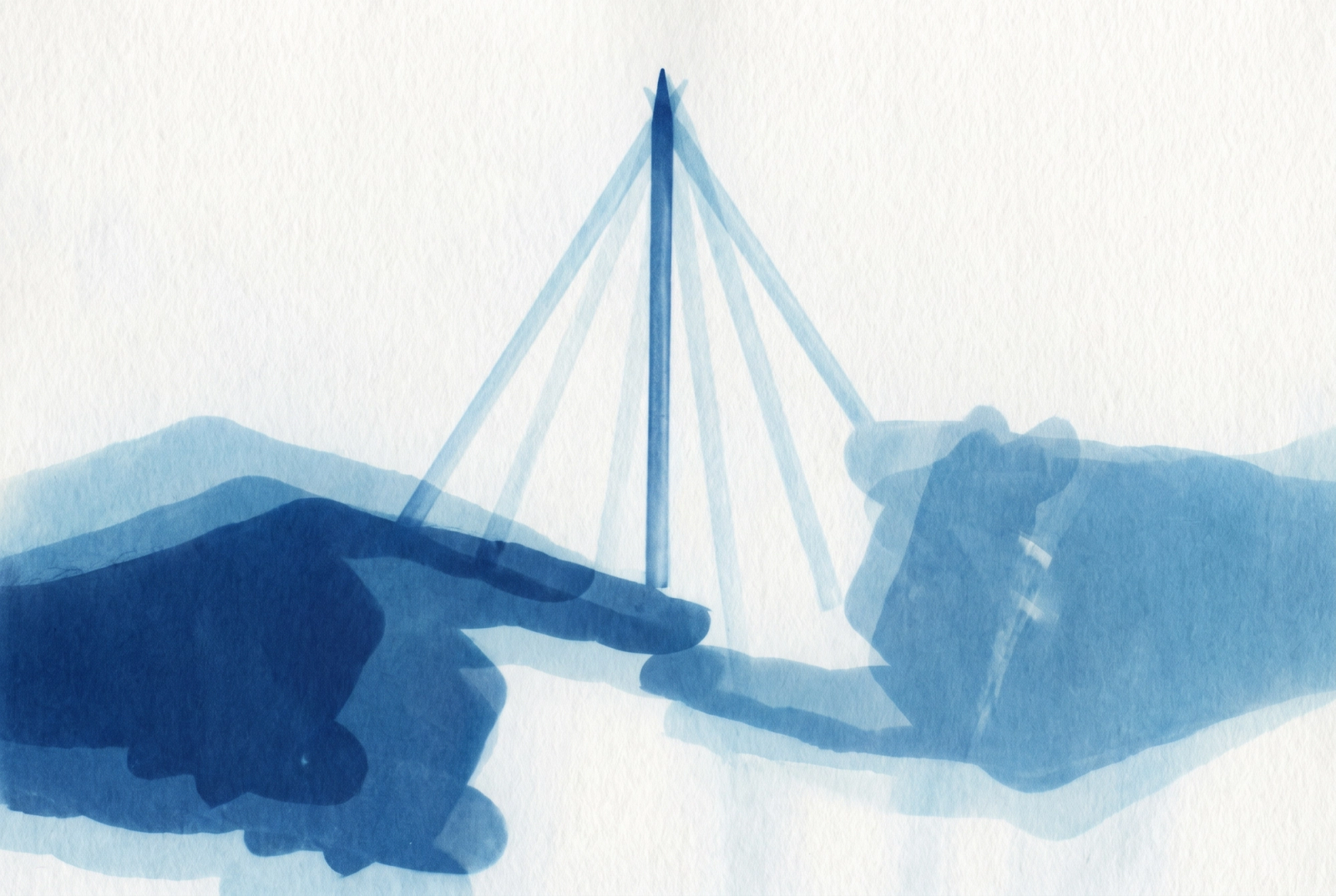
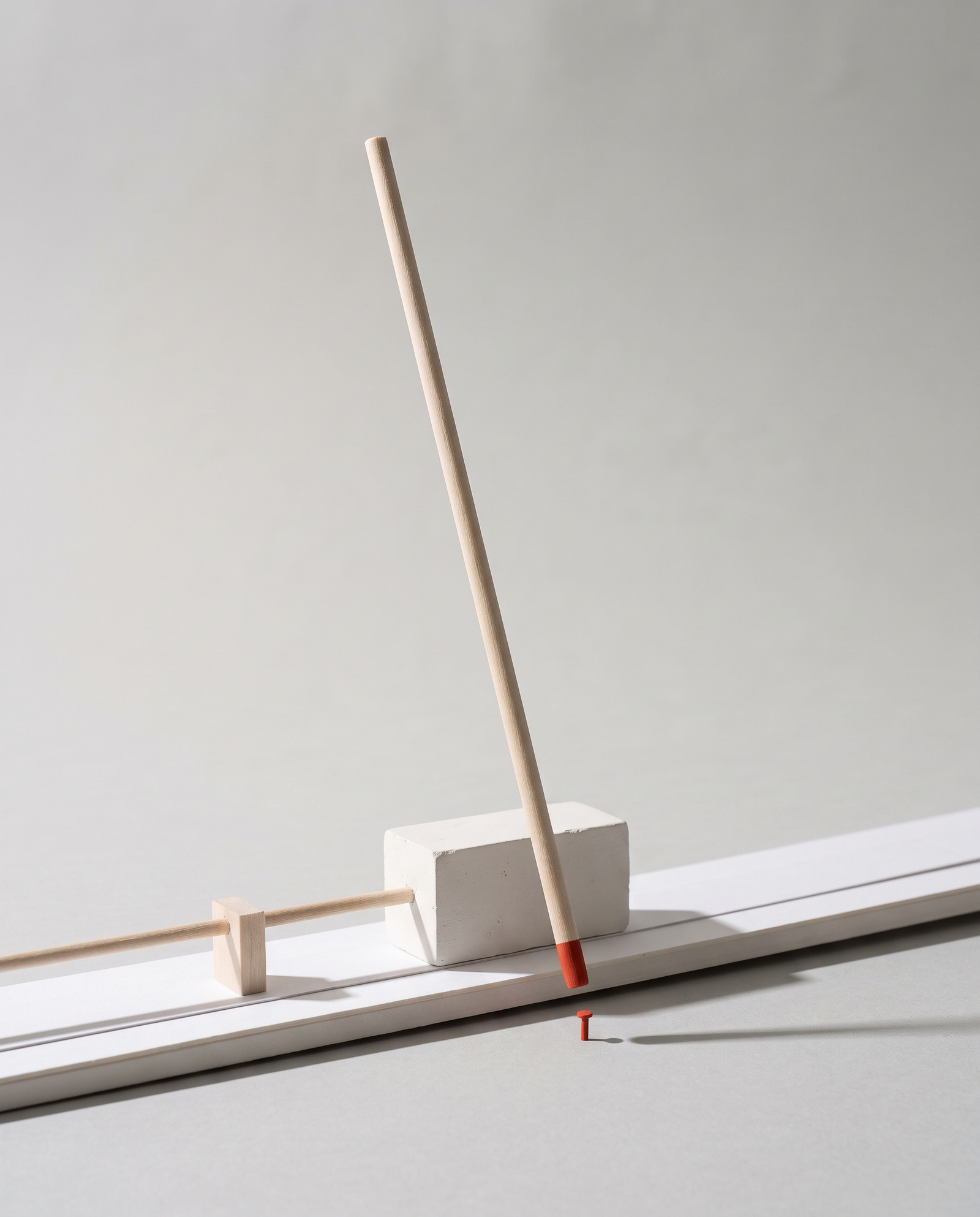
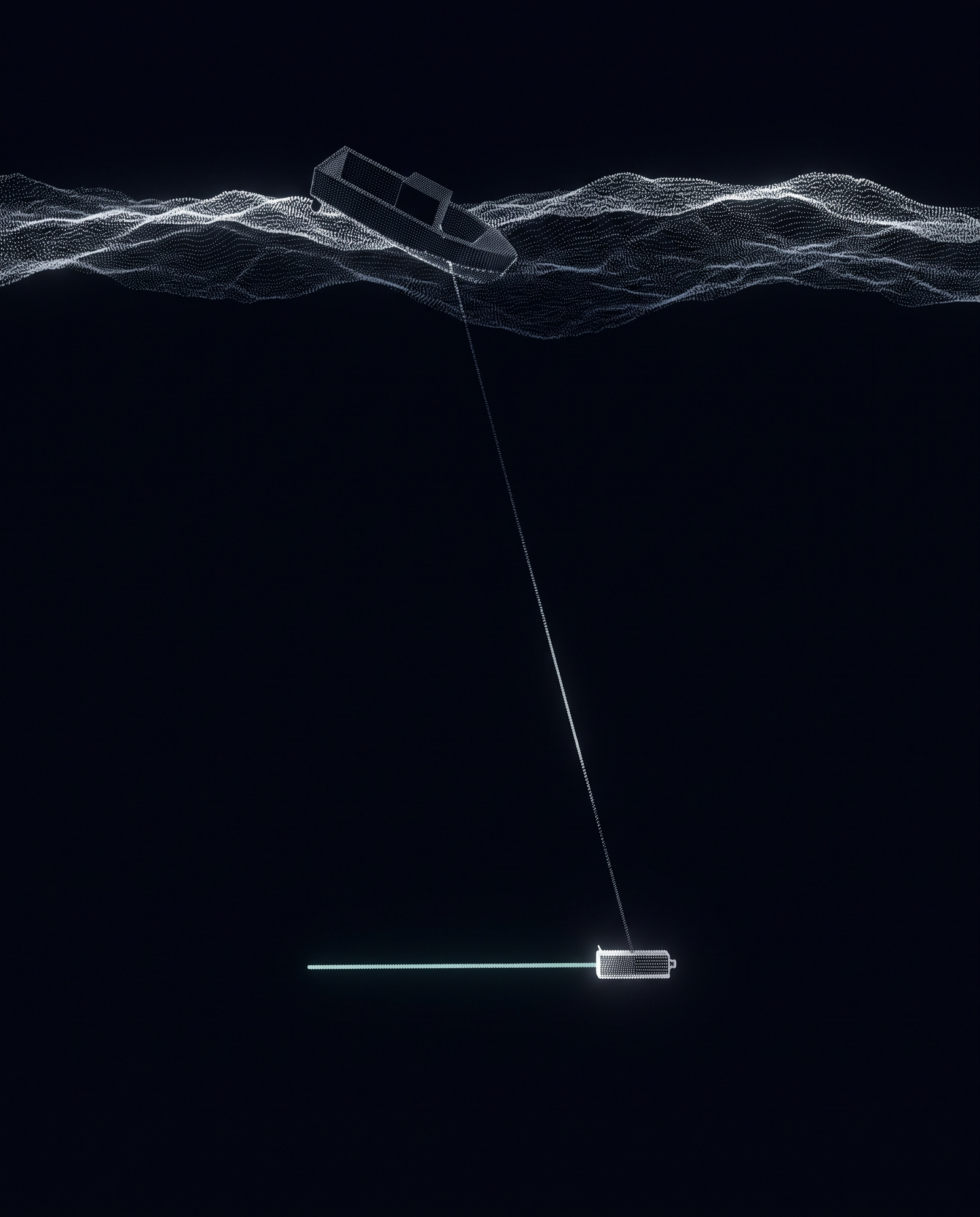
One test, two kinds of system
The procedure needs no model of the interior. It needs a candidate variable and a way to disturb it, and it reads the response. That is why it can be carried to systems with unlike interiors.
For a learned robot policy, the candidate might be a low-dimensional feature of its observations, such as the apparent position of a gripper against an object. Disturb that feature directly, in simulation, by amounts and directions chosen in advance, and write down what a policy that ignored it would do. Compensation says the policy acts to restore the feature. Removing the feature from the observation is the counterpart of blocking the sensor. What a policy holds still asks a version of this of policies: because named features are physically coupled in a scene, it disturbs the scene along fixed independent directions rather than one named feature at a time.
For a person facing a changed rule, the rule plays the disturbance, and the question is which outcome the person keeps near a value while their actions change around it. No inquiry on this site tests that yet.
What the analogy does not license
A shared procedure shows that the question can be asked of both. Several things do not follow.
A held variable is not a goal inside a network. The test shows what is stabilised and says nothing about mechanism. A policy may hold a quantity because its training covered disturbances of that kind, with no comparator anywhere in it. Whether a policy contains anything like the loop above is a separate question that needs other evidence.
A null result is narrow. Failure to compensate rules out a guessed variable at the disturbance sizes used. A disturbance beyond the system's capacity passes through and looks like an absence of control. A policy trained on a narrow range of disturbances will compensate inside that range and not outside it, which is information about the range.
For people, the disturbance is harder to deliver. A changed budget disturbs a quantity only through the person's understanding of what it affects, so the experimenter cannot apply it to a chosen variable as in a tracking task. People also keep standards the experimenter did not choose. Runkel notes that protest shows some variable is disturbed and is a poor guide to which one[2].
A person and a policy that answer the same test have shared a procedure, and that is all the test establishes. Whether the likeness runs deeper is a question for each case. The test is taken here as a method only; Powers's wider claims about people are not assumed.
References
- Powers, W. T. (1973). Behavior: The Control of Perception. Aldine, Chicago.
- Runkel, P. J. (2003). People as Living Things: The Psychology of Perceptual Control. Living Control Systems Publishing, Menlo Park, CA.
- Rosenblueth, A., Wiener, N. and Bigelow, J. (1943). Behavior, Purpose and Teleology. Philosophy of Science 10(1), 18–24.
- Wiener, N. (1948). Cybernetics: or Control and Communication in the Animal and the Machine. Hermann, Paris; The Technology Press, Cambridge, MA; John Wiley & Sons, New York.
- Ashby, W. R. (1952). Design for a Brain. Chapman & Hall, London (US edition: John Wiley & Sons, New York).
- Marken, R. S. (2014). Testing for controlled variables: a model-based approach to determining the perceptual basis of behavior. Attention, Perception, & Psychophysics 76(1), 255–263.
- Marken, R. S. (2005). Optical trajectories and the informational basis of fly ball catching. Journal of Experimental Psychology: Human Perception and Performance 31(3), 630–634.
Cite as
Far Akin Research Labs (2026). Disturb it and watch what it holds. Far Akin Research Labs. https://farakin.vercel.app/notes/disturb-it-and-watch
@misc{farakin2026-disturb-it-and-watch,
  title = {{Disturb it and watch what it holds}},
  author = {Far Akin Research Labs},
  howpublished = {\url{https://farakin.vercel.app/notes/disturb-it-and-watch}},
  year = {2026},
  month = oct,
  url = {https://farakin.vercel.app/notes/disturb-it-and-watch}
}
Noticed an error or a missing source? Send a correction